
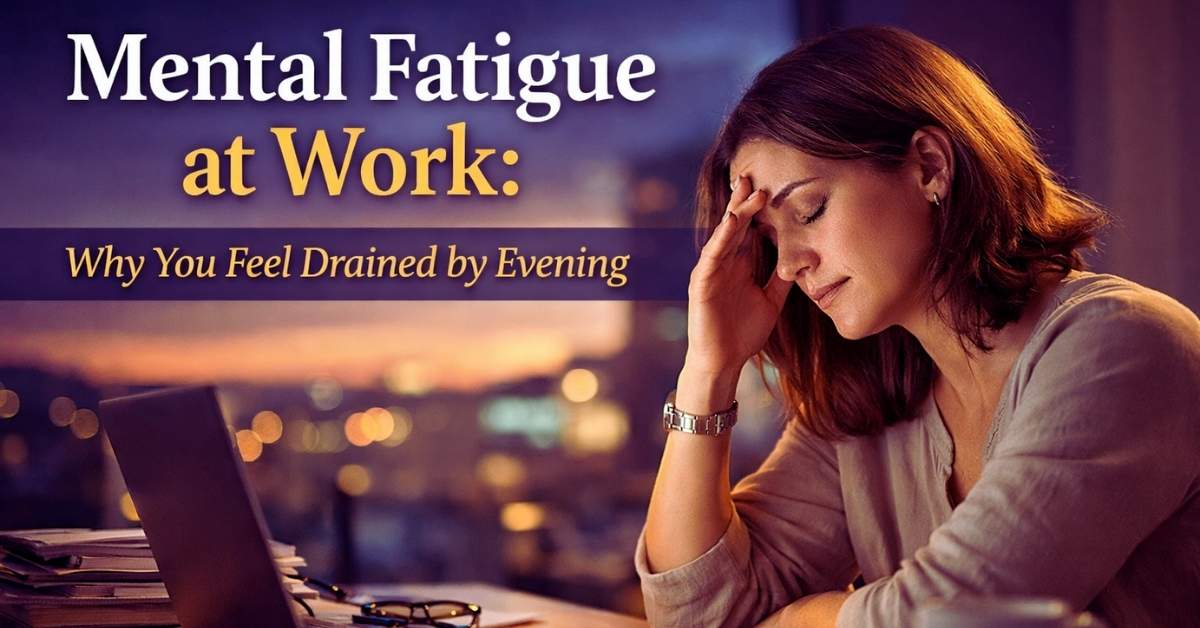
Have you ever thought, as you close your laptop in the evening, “I barely got out of my chair today, yet why do I feel so tired?” That familiar heaviness, dulling of the mind, lack of patience, lack of energy for anything beyond work, isn’t just about long hours or poor sleep. Often, this is a sign of mental fatigue at work, and it’s more common than we think.
Mental fatigue at work doesn’t always come with clear warning signs. Sometimes it shows up as zoning out during conversations, feeling unusually irritable over small things, or having nothing left to do after the workday ends. Everything may seem fine on paper. You’re doing your work, meeting expectations, and being productive. But deep inside, you’re feeling exhausted.
In today’s work culture, where being available all the time is considered admirable and slowing down is considered risky, mental exhaustion is easy to overlook. However, over time, it starts affecting more than just your performance. It affects your health, your relationships, and your sense of balance. This blog explores why mental fatigue at work tends to increase in the evening, what lies behind it, and how you can gradually overcome it without quitting your job or being overly hard on yourself.
What Is Mental Fatigue at Work?
Mental fatigue at work is a condition characterized by mental exhaustion after a long day of thinking, concentrating, making decisions, and managing emotions. Unlike physical tiredness, it doesn’t always go away with rest. You may spend most of your day sitting, yet still feel completely exhausted by the evening, even after a good night’s sleep.

This kind of fatigue affects how your brain functions. The tasks that once seemed easy now seem burdensome. Concentration becomes difficult, creativity fades, and even small challenges can trigger more intense emotional reactions than usual. Over time, mental tiredness at work can gradually erode your confidence, motivation, and sense of control.
It’s essential to remember that mental fatigue isn’t a personal failing or a sign of a lack of resilience. In many cases, this is a natural response to modern work environments that demand sustained attention, quick decisions, emotional regulation, and constant digital engagement.
Why Mental Fatigue Builds Up by Evening
Many people find that mental fatigue is most felt during work as the evening approaches. As the day drags on, even simple choices can seem overwhelming, and your mind reaches a point where it feels completely “done”. This isn’t a lack of motivation; it’s a natural reaction to the mental energy you’ve been consuming throughout the day. Here’s why this happens.
1. Your brain makes too many decisions
From the very beginning of your workday, your brain is constantly making decisions – replying to emails, setting priorities, switching between tasks, handling meetings, and dealing with interruptions. Every decision, however small, silently consumes mental energy. By evening, that energy is gone, and decision fatigue takes over, leaving you mentally exhausted.
This constant cognitive effort is a major cause of mental fatigue in the workplace, especially in roles that involve problem-solving, planning, or frequent multitasking.
2. Continuous digital stimulation
Modern work is largely screen-based. Emails, messages, notifications, dashboards, and video calls keep your brain in a near-constant state of alert. There is very little space for your mind to calm down or rejuvenate.
Over time, this excessive use of digital devices causes mental fatigue in the workplace, which gradually increases throughout the day. By evening, your brain simply runs out of capacity to process more information.
3. Emotional labor you don’t see
Many roles require emotional control – staying calm under pressure, remaining polite when stressed, managing expectations, or hiding disappointment. This emotional labor takes real mental energy.
When emotional pressure is high, mental tiredness at work increases, even if your workload doesn’t appear heavy on the surface.
4. Lack of mental closure
When your workday ends without a clear sense of completion, your mind keeps thinking about unfinished tasks. This mental stress makes it difficult to truly relax and further increases mental fatigue by the evening.
Signs You’re Experiencing Mental Fatigue at Work
Mental fatigue at work doesn’t always show up in obvious ways. Often, it sneaks in quietly through everyday experiences, such as:
- Difficulty concentrating or staying focused
- Feeling mentally foggy or unusually slow
- Increased irritability or emotional sensitivity
- Little to no motivation after work hours
- Trouble switching off work-related thoughts
- Frequent headaches or eye strain
- Feeling drained despite minimal physical effort
If many of these signs sound familiar to you, it’s worth paying attention to them. Constant mental fatigue in the workplace, if ignored, can gradually lead to burnout over time.
How Mental Fatigue at Work Affects Your Life beyond Work
One of the most difficult aspects of mental fatigue in the workplace is how quietly it follows you home. By evening, you may feel so mentally exhausted that you are unable to enjoy hobbies, have meaningful conversations, or even do the simple things that once brought you comfort.
You might cancel plans at the last minute, mindlessly scroll through your phone, or feel guilty for not being fully present with the people around you. Over time, this pattern creates an imbalance where work takes up most of your best mental energy, leaving little time for yourself or your relationships.
Mental tiredness at work doesn’t just impact your professional performance; it also gradually affects your happiness, emotional health, and sense of connection with people outside the workplace.
Why High Performers Are More Prone to Mental Fatigue
Interestingly, mental fatigue at work often affects high performers the most. People who genuinely care about doing good work, holding themselves to high standards, and constantly pushing their limits are more likely to feel mentally exhausted over time.
High performers often tend to:
- Overthink decisions
- Carry emotional responsibility for outcomes
- Struggle to fully switch off mentally
- Feel guilty when they rest
While these habits may seem like dedication, over time, they quietly increase mental fatigue in the workplace and make meaningful recovery much harder.
The Difference between Mental Fatigue and Burnout
Mental fatigue and burnout are closely related, but they are not the same thing. Mental fatigue is often an early sign – a quiet nod from your mind asking for rest, clear boundaries, or support.
Burnout develops when that signal is ignored for too long. It’s a deeper, more lasting state marked by emotional exhaustion, isolation, and reduced effectiveness. Addressing mental fatigue early on can help prevent burnout later.
Gentle Ways to Reduce Mental Fatigue at Work
Reducing mental fatigue at work doesn’t have to mean making big changes or tough decisions. Often, it’s these small, consistent changes that gradually restore your mental energy and make workdays more manageable.
1. Build mental pauses into your day
Taking a break from the screen gives your brain a chance to breathe. Even five minutes of quiet time, such as stretching, taking a walk outside, or sitting quietly, can help reduce mental tiredness at work over time.
2. Limit constant task-switching
Switching from one task to another constantly resets your brain. Whenever possible, group similar tasks together so your mind can stay focused and conserve energy, reducing mental fatigue in the workplace.
3. Create an end-of-day ritual
Simple habits like writing a to-do list for tomorrow or closing open tabs signal that the workday is coming to an end. This sense of closure helps calm your mind and prevents mental fatigue from taking over your evening.
4. Reduce unnecessary mental load
Not everything needs to be done perfectly. Letting go of unrealistic expectations reduces the mental pressure that causes mental tiredness at work.
5. Protect your evenings
Evenings are meant for relaxation. Simple routines, less screen time, and meaningful connections help restore the mental energy expended throughout the day.
How Workplace Culture Fuels Mental Fatigue at Work
Along with personal habits, workplace culture also plays a big role in mental fatigue in the workplace. In many environments, being busy is considered admirable, long working hours are normalized, and quick responses are silently expected. Over time, this trains employees to remain mentally alert throughout the day, even when it’s exhausting.
When responding quickly feels mandatory, taking breaks feels guilty, and productivity is evaluated based on visibility rather than impact, your brain rarely gets permission to slow down. This constant state of mental readiness gradually increases mental fatigue in the workplace, even in roles you really enjoy.
On top of that, frequent meetings, unclear priorities, and last-minute requests further increase the cognitive load. Your mind keeps shifting directions, leaving little time for deep concentration, mental clarity, or meaningful rest during the day.
Long-Term Strategies to Protect Yourself from Mental Fatigue at Work
While daily habits make a difference, protecting yourself from mental fatigue in the long run requires changes that are sustainable and practical over time.
1. Redefine productivity
Productivity doesn’t mean working more or being busy all the time. It’s about focusing on what really matters, without constantly exhausting yourself. Shifting how you define productivity can ease the inner pressure that often fuels mental fatigue in the workplace.
2. Advocate for mental capacity
Open and honest conversations about workload, priorities, and deadlines can significantly reduce the ongoing mental stress. Setting these boundaries isn’t selfish; it’s a necessary step to protect your mental capacity and health.
3. Build emotional awareness
Paying attention to emotional stress helps you identify whether the exhaustion is emotional rather than physical. This awareness allows you to respond mindfully rather than overstressing, which acts as an early warning system for mental fatigue at work.
Final Thoughts
Mental fatigue at work is your mind’s quiet way of demanding attention, balance, and compassion. Ignoring it doesn’t make it go away; it can take a toll on your evenings, weekends, and emotional well-being. Over time, that constant tiredness begins to feel normal, even if it isn’t.
When you understand what causes mental fatigue and respond by making small, deliberate changes, you gradually begin to regain your energy. You don’t need to care less about your work or lower your standards. You just need to work in a way that respects your mental limitations.
Feeling tired by the evening is not a personal failing, but it is a signal. And the moment you choose to listen to it, you take a meaningful step towards a healthier and more sustainable way of living and working.