
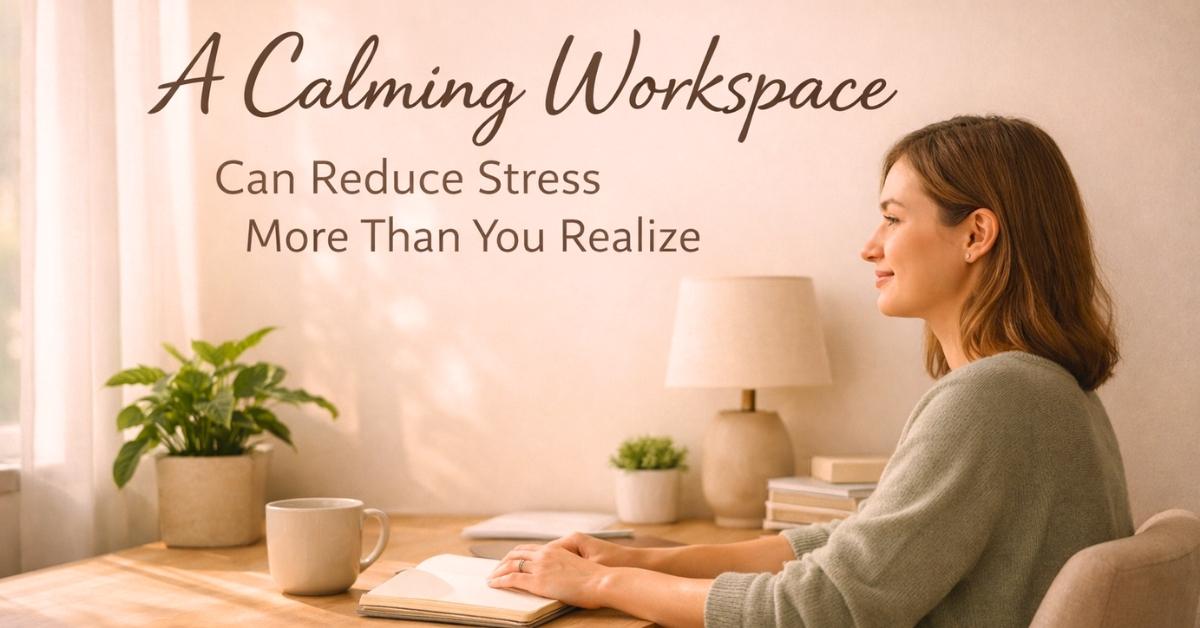
We usually blame deadlines, meetings, or difficult conversations for stress. But sometimes, stress comes from a quiet and easily overlooked place – the place where you work every day. A calming workspace can impact your stress levels more than you might think.
A cluttered desk, harsh lighting, constant background noise, or an uncomfortable chair may not initially seem worrisome. But over time, these small discomforts keep your body a little stressed and your mind restless. You might have difficulty concentrating, feel fatigued quickly, or experience restlessness even when your workload remains unchanged.
A calming workspace isn’t about designer furniture or perfectly styled desks. It’s about creating an environment that gently supports your mind rather than overstimulating it. When your surroundings feel organized, familiar, and intentional, your brain doesn’t need to be in survival mode all day.
In this article, we’ll explore how a calming workspace can reduce stress more than you might think – emotionally, psychologically, and physically, along with simple, realistic ways to create one that works for you, wherever you work from.
Why Your Workspace Affects Your Stress Levels
Even when you’re focused on your work, your brain is quietly paying attention to everything around you. It constantly scans your surroundings, asking one simple question: Am I safe here, or do I need to stay alert?
When your workspace is cluttered, noisy, or visually too stressful, your brain can’t fully relax. It remains vigilant, watching for distractions, inconveniences, and disruptions. This low level of alertness may not seem dramatic in the immediate term, but over time, it adds up. You may feel mentally tired easily, be more irritable than usual, or feel stressed for no apparent reason.
A quiet workspace reduces that inherent stress. When your surroundings are familiar, comfortable, and easy to understand, your nervous system has less to manage. Your mind finds more room to think clearly, solve problems, and stay in the present rather than in survival mode.
This is why the stress levels of two people doing the same job can be very different. The work may be the same, but the environment determines how heavy it will feel.
The Hidden Stress of Visual Clutter
Clutter isn’t just about mess – it quietly drains your mental energy.

Every item on your desk demands a little attention from you, even if you don’t realize it. Paper, cables, sticky notes, and things you no longer use create constant visual “noise” that your brain has to deal with throughout the day. Research in environmental psychology shows that clutter increases cognitive load, meaning your brain has to work harder to maintain focus. Over time, this can lead to:
- Mental exhaustion
- Reduced concentration
- Increased irritability
- A lingering sense of being overwhelmed
A calming workspace helps reduce this mental pressure. Clean surfaces, thoughtful organization, and only having things you really need at the front can rapidly reduce mental stress. Your desk doesn’t have to be empty; it should just feel purposeful rather than cluttered.
How a Calming Workspace Supports Your Nervous System
Your nervous system reacts deeply to the environment around you. Bright lights, constant noise, and uncomfortable sitting positions can silently trigger a stress response, even if you don’t feel stressed out on the surface. A calming workspace helps by sending gentle signals of comfort and security. Soft lighting, natural textures, and an orderly, predictable arrangement reassure your body that it can relax. It’s your environment saying, you’re safe here.
When your nervous system feels more settled:
- Your breathing becomes steadier
- Muscle tension eases
- Focus improves
- Emotional reactions feel less intense
This matters even more for those who already suffer from workplace stress, anxiety, or burnout. A calming workplace becomes a small but constant source of relief – supporting your nervous system throughout the day, with each quiet moment.
Lighting: One of the Most Overlooked Stress Triggers
Lighting indirectly affects our mood throughout our workday, even though we rarely pay attention to it.
Harsh fluorescent lights or dim, dark corners can strain your eyes, cause headaches, and leave you feeling mentally tired. Over time, working in poor lighting can make you feel more irritable, less focused, and strangely unmotivated, even if you’re trying your best.
Whenever possible, natural light really makes a difference. It supports your body’s internal clock and helps maintain stable energy levels. When natural light isn’t available, warm, soft light is a much gentler option than bright white bulbs that put your system into a stressful state.
In a calming workspace, lighting feels comfortable rather than harsh. It gives your eyes and mind permission to relax, instead of staying on constant alert all day.
Sound and Silence: Creating an Auditory Safe Space
Noise is one of those stress factors that we often underestimate. Constant background noises like conversations, traffic, and notifications can make it difficult for your mind to completely quiet down.
A calming workplace doesn’t have to be completely quiet, but it should be comfortable and organized. This might look like:
- Noise-canceling headphones
- Soft instrumental music
- White noise or nature sounds
- Clear boundaries around interruptions
When the sound feels predictable and gentle, your brain can finally relax instead of being overly alert. Stress levels decrease, and it becomes easier to concentrate for longer periods of time without becoming mentally exhausted.
Comfort Matters More Than Productivity Hacks
An uncomfortable chair, an inconvenient desk height, or constantly hunching over a screen may seem like minor issues at first. But when your body remains uncomfortable throughout the day, that discomfort gradually turns into stress.
Your body remembers tension. Shoulder stiffness, back pain, or neck strain aren’t just physical; they also affect your mental health. Over time, this can show up as headaches, fatigue, and a feeling of emotional exhaustion that is difficult to get rid of.
A calming workplace puts comfort first. Comfortable seating, the right screen height, and plenty of room to move allow your body to relax rather than feel cramped. And when your body feels at ease, your mind naturally follows.
Productivity-boosting devices can be useful, but they can’t compensate for physical discomfort. Comfort isn’t an indulgence; it’s the foundation that makes everything else possible.
Personal Touches and Emotional Safety
A calming workspace often includes small, personal things that help you feel grounded and emotionally comfortable.
This could be:
- A plant
- A framed photo
- A meaningful quote
- A calming color palette
These simple elements quietly remind your brain that you are more than your to-do list and deadlines. They bring a sense of warmth and familiarity to your space, which can be very comforting, especially on busy work days.
Emotional safety at work isn’t just determined by people; it’s also influenced by the environment around you. When your workspace feels personal, welcoming, and supportive, it’s easier to focus fully on work without constantly straining your body and mind.
Digital Clutter Is Stress Too
When we think of clutter, we usually have images of physical mess in mind. But digital clutter can be just as overwhelming and, in many ways, even more exhausting.
Too many open tabs, constant notifications, a crowded inbox, and a cluttered desktop keep your mind in a constant state of “almost paying attention.” Even when you’re not reacting to anything, your mind remains alert, waiting for the next obstacle.
A calming workplace also includes a quiet digital environment. This might look like:
- Closing tabs you no longer need
- Turning off non-essential notifications
- Organizing files into simple, easy-to-find folders
- Using focus modes during deep work
Reducing digital noise gives your mind breathing space. Your focus feels steadier, your thoughts are less scattered, and stress gradually begins to ease. While subtle at first, the impact becomes profound over time.
Minimalism vs. Personalization: Finding Balance
A calming workspace doesn’t mean getting rid of all your favorite things. For some people, extreme minimalism can feel cold, sterile, or even unsettling, and that can quietly add to stress instead of easing it.
The key is balance.
Ask yourself:
- Does this item help me focus or feel more comfortable?
- Does it bring a sense of calm, or does it pull my attention away?
- Does it serve a purpose — emotionally or practically?
A calming workplace feels thoughtful, not empty. It reflects who you are, while still creating a sense of clarity, ease, and emotional breathing room.
How a Calming Workspace Reduces Long-Term Stress
The real power of a calming workspace lies in how consistently it supports you.
Stress doesn’t always show up as one big moment. More often, it stems from small, repeated irritations that occur throughout the day. When your environment constantly demands your attention or patience, that stress gradually builds up.
A calming workplace works in the opposite way. It reduces those everyday micro-stressors, little by little. Over weeks and months, this can lead to:
- Lower baseline stress levels
- Improved focus and steadier energy
- Better emotional regulation
- A reduced risk of burnout
You might not notice the change at first, but over time, your workdays will start to feel lighter, calmer, and much smoother.
Simple Ways to Create a Calming Workspace
You don’t need to completely redesign your space to feel the benefits of a calming workspace. Small, deliberate changes often make the biggest difference.
Start with:
- Clearing just one surface
- Adjusting your lighting to feel softer
- Reducing visual clutter, even slightly
- Adding one comforting or personal element
- Improving your seating or posture
Even a small change can signal to your nervous system that your environment is becoming more supportive, calm, and comfortable for the day.
Final Thoughts: Calm Is a Daily Practice, Not a One-Time Fix
Creating a calming workspace isn’t something you set up once and never think about again. It’s a consistent, gentle practice that involves noticing what sustains you and what slowly drains your energy.
As your workload, roles, and life stages change, so will your needs. What feels comforting and helpful today may feel chaotic or overwhelming a few months later. Allowing the space around you to organize is not a failure; it is a sign of awareness and mindfulness.
A calming workspace can reduce your stress more than you think because it quietly adjusts you to your current situation every day. It doesn’t require any extra effort or motivation. It simply gives you a little more time to focus, think clearly, and breathe easily.
And in a world that constantly demands you do more and move faster, that kind of peace is no small thing; it’s extremely powerful.